Stand with Ukraine
After two years of living through a worldwide pandemic, the start of 2022 should have kickstarted a brighter prospect for Europe, the chance to seize the momentum, ‘to get to work, to make Europe greener, more digital and more resilient’. However, on 24 February came the horror of war in Ukraine, casting a dark shadow over that ambition, threatening to alter the course of the EU in the years ahead. Three years later, Eurofound continues to stand with Ukraine and has moved to respond to the evolving crisis.
Find the latest content on this topic below.
Barriers to employment of displaced Ukrainians
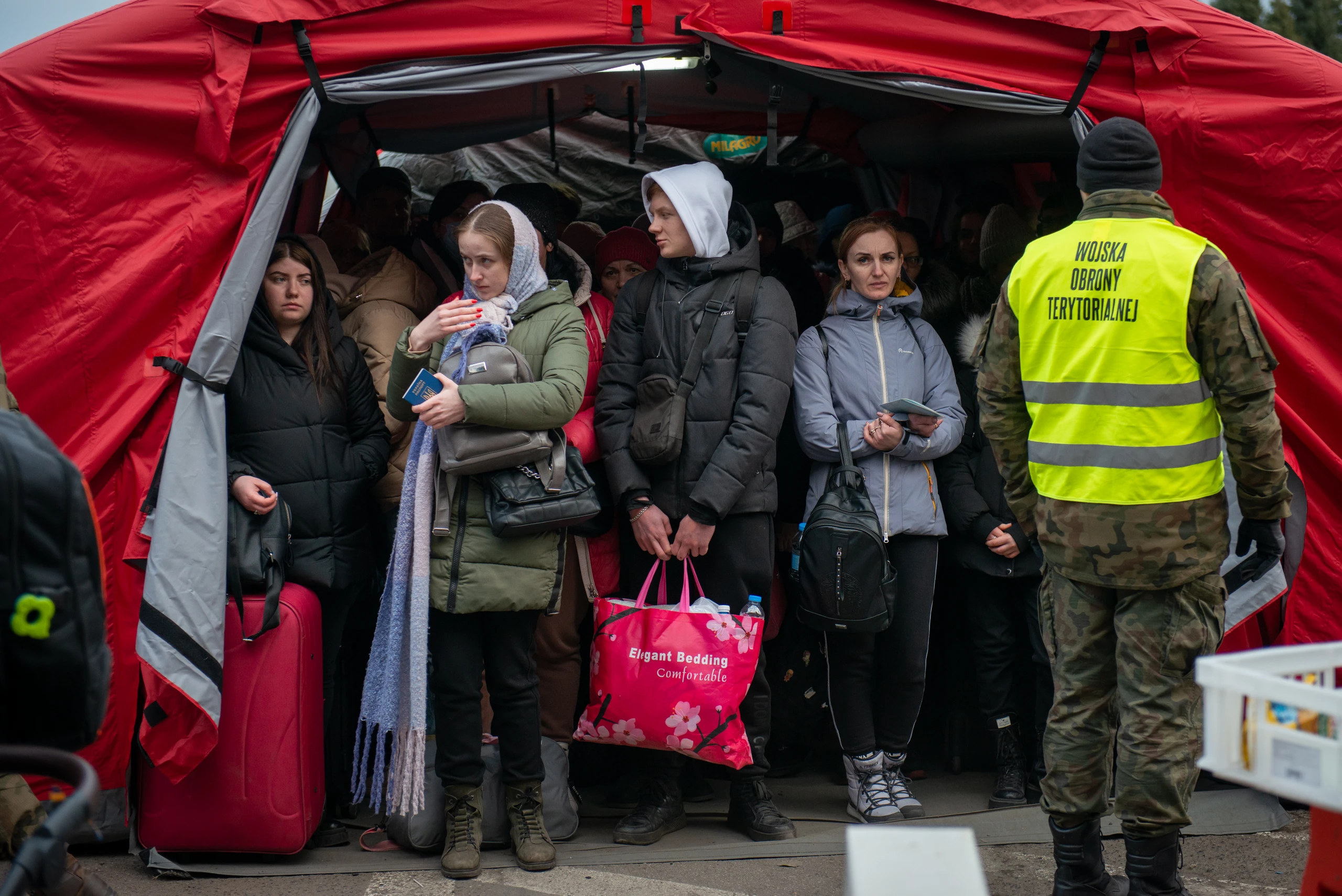
In responding to Russia’s war against Ukraine, the EU activated its Temporary Protection Directive (TPD) for people who fled the country, allowing them to settle in the EU and to access basic public services and the labour market. By spring 2023, more than 4.5 million people had made use of the TPD or similar national protection schemes in the EU. In 2022, the European Union Agency for Fundamental Rights conducted an online survey among people displaced from Ukraine. Eurofound has analysed the survey results on their experiences when seeking to access employment. This paper highlights the main barriers that displaced people encountered and suggests ways to facilitate their inclusion.
2022 in review
The dawn of 2022 brought muted optimism to a Europe beginning to emerge from the COVID-19 pandemic, and the progress of vaccination programmes worldwide brought hope. Government and EU support during the pandemic had kept unemployment at bay, averting the widescale collapse of businesses. In step with the EU’s plans for the year, Eurofound’s focus was firmly on a post-pandemic Europe: the recovery and the twin transition to a green and digital economy. All this changed with Russia’s invasion of Ukraine and the start of a war of aggression. The EU and its institutions were compelled to respond rapidly.In its role to provide knowledge to assist in the development of better social, employment and work-related policies that will lead to a strong social Europe, Eurofound continues to adapt and expand its multiannual research programme to explore and respond to issues emerging from the war in Ukraine. The Agency seeks to provide adequate and timely analysis to its stakeholders, policymakers and to the larger public, using existing Eurofound data collection instruments and monitoring tools, as well as its wide range of research tools.
Eurofound’s country profile for Ukraine, published in 2022, offers a wealth of information on key components of working life in the country. Profiles for neighbouring Moldova and Georgia followed in 2023.
Data collection and monitoring tools
Eurofound’s data collection instruments and monitoring tools have been adjusted to collect evidence to inform the policy responses that will be necessary to support the integration of refugees and displaced persons from Ukraine and prevent the risk of recession resulting from the economic impact of the Ukraine crisis. These are outlined below.
Data sources collecting early information and first results
Network of Eurofound Correspondents: Reporting on national measures to accommodate displaced people from Ukraine, counter inflation and supply problems within the Ukraine section of the EU PolicyWatch database. New categories have been created to classify measures such as direct support for refugees, companies, workers and citizens
European Restructuring Monitor: Recording new restructuring cases as a result of the war in Ukraine. Read the article on the impact of the war in Ukraine on employment changes in the EU:
Living and Working in the EU e-survey: Since 2022 the survey includes additional questions focusing on the engagement of citizens and their opinion about their government’s response to the crisis.
Adaptation of research projects
Eurofound has adapted a range of projects to cover the turn of events of the last three years and into the future. Topics include:
Social impact of migration, analysing post-war trauma and the challenges of receiving and integrating Ukrainian refugees
Working life annual update for 2022 covered the effects of the war in Ukraine on working life in the Member States
Unaffordable and inadequate housing, including analysis on energy consumption amid rising prices
Barriers to employment of displaced Ukrainians, working with the European Agency for Fundamental Rights to analyse the survey results on the experiences of those who fled Ukraine
Transition to a carbon-neutral economy, looking at the impact on employment and its effect on overall job quality, which considers the effects of gas/oil shortages and increasing energy prices when developing scenarios, working with the European Environment Agency
Platform economy, including updates to the online repository on the role of platforms to create work for refugees/migrants, with a particular focus on migrants from Ukraine
Minimum wage annual review: data collection on developments impacting minimum wage rates and investigating how inflation is reflected in minimum wage increases
Social dialogue: national reporting includes the consequences of increased inflation and cost of living
Regional perspective on labour market change following the COVID-19 pandemic, with an additional focus on countries and regions receiving a large number of refugees from Ukraine
Social cohesion and the role of economic and social discontent, exploring the link between support for Ukraine and discontent
Social impact of migration, to include labour market and access to social services, equal treatment of refugees, volunteering and public support
Youth life and work in a post-pandemic world, exploring the possibility with the European Training Foundation to collect data in Ukraine
Income inequalities and the middle class, to also examine expected effects of inflation and the increasing cost of living
Company practices to tackle labour shortages, including corporate initiatives to integrate migrants from Ukraine
In addition to the death and destruction from the war waged by Russia on Ukraine and its people, this has brought a massive surge of displaced people to the EU, increased emigration from Russia, and an unfolding humanitarian crisis. In response, massive economic sanctions imposed on Russia by the international community have cut off vital capital and foreign trade flows to the country. The war has affected the markets for oil and gas, as well as other vital commodities. Prices of energy and food have surged, and supply chains have been disrupted with inflation likely to increase further.
These developments have the potential to deeply affect the living conditions of many European citizens and are likely to have a substantial effect on the world of work, quality of life and social cohesion in the EU in the years to come. Policy will need to respond accordingly.
A range of support measures have been initiated at EU level to help Member States meet the needs of refugees. The European Council activated the first-ever Temporary Protection Directive, which includes special protection for children, access to education and healthcare, as well as access to jobs, accommodation and housing. In October 2022, the Council adopted conclusions on Ukraine/Russia, critical infrastructure, energy and economy and external relations. On 11 June 2024, the Commission proposed to extend the Temporary Protection Directive for people fleeing Ukraine until 4 March 2026, which was adopted by the Council on 25 June. On 1 February 2024, EU leaders approved a deal to provide €50 billion in support for Ukraine in the period 2024–2027.
European Council: Ukrainian refugees: Council extends temporary protection until March 2026opens in new tab
European Council: European Council conclusions on the Multiannual Financial Framework and Ukraine, 1 February 2024PDFopens in new tab
European Council: European Council conclusions, 20–21 October 2022opens in new tab
European Commission: Ukraine: EU support to help Member States meet the needs of refugeesopens in new tab
This section provides access to all content that has been published on the topic.